By Aditya Kumar Nov 26, 2026
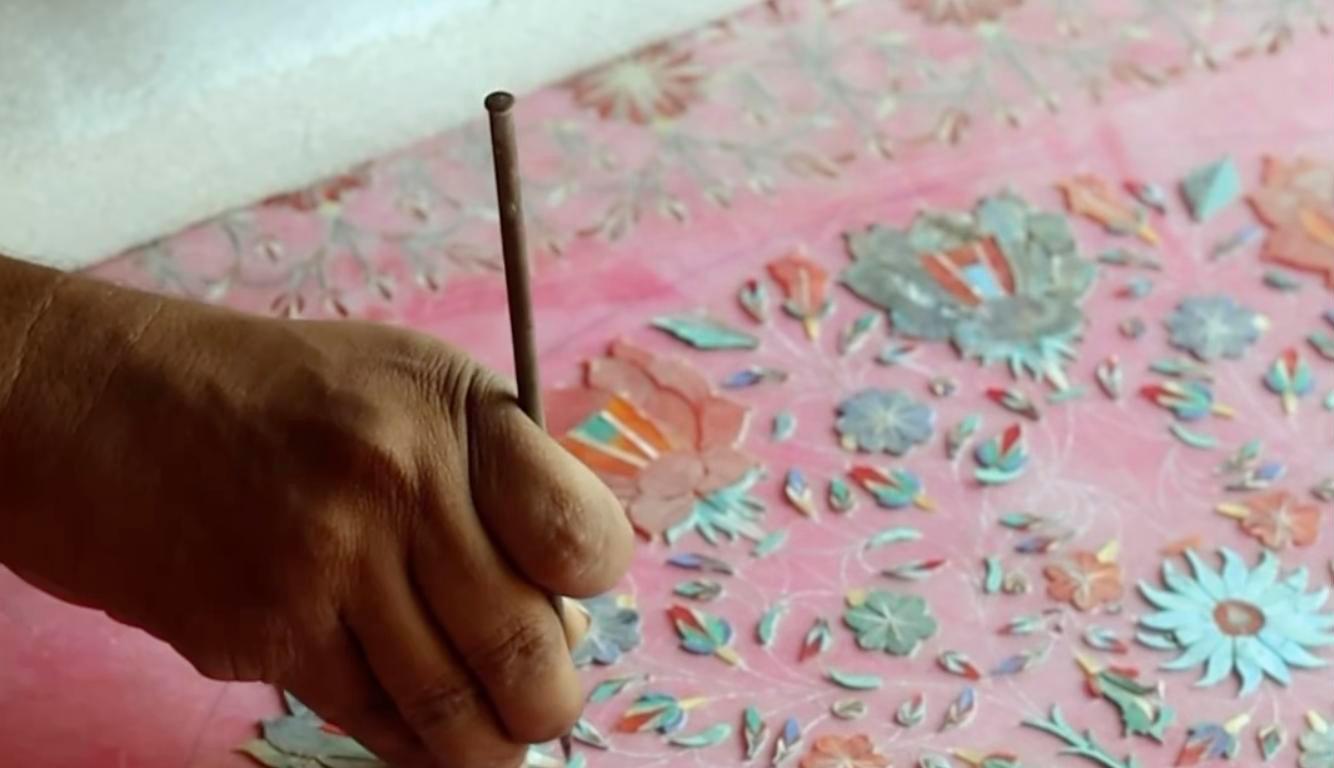
The Taj Mahal is known across the world for its architecture. Step closer and another achievement appears: flowers and patterns that look painted onto the marble but are made of stone. This is pachikari, also written parchin kari, the art of setting precious and semi-precious stones into marble.
A craft of many roots
The technique is often compared with Italy’s pietra dura, meaning “hard stone”. Historians and writers debate its origins. Many see the Italian work as at least one inspiration, and accounts of the craft also describe the Mughal court’s role in developing it in India. It reached one of its finest expressions under Shah Jahan, who built the Taj Mahal.
Stone within stone
The idea is simple to describe and very hard to do. The design is carved out of the marble. Small pieces of coloured stone are cut and shaped to match, then fitted into those hollows to build up flowers and geometric patterns. A single bloom may need several pieces, and each has to sit neatly beside the next.

Behind every intricate design lies the patience, precision, and generations of knowledge passed down through families of craftsmen.
Still alive in Agra
The craft did not end with the Mughals. In Agra neighbourhoods such as Taj Ganj, Nai ki Mandi and Gokulpura, artisans have made inlaid tabletops, trays, boxes and other decorative pieces. Some use newer tools that speed up parts of the work, while others stay close to older methods.
Why it is fading
The work takes a long time, and the rewards are often limited. Fewer young people are taking it up, opportunities are narrow and cheaper machine-made alternatives compete for buyers. A 2025 Business Standard report described artisans struggling with low demand, poor earnings and fading interest, after a heavy blow when the pandemic closed the Taj Mahal.
When we admire the monument, we are also admiring a skill. Keeping that skill alive depends on whether the people who practise it today can make a living from it. If it fades, India loses a living piece of its heritage.
Watch the Reel
Watch Aditya Kumar’s reel on Instagram.
Read next: how Firozabad’s glass bangles are made and Phool Patti ka Kaam of Aligarh.
Location Context
Agra, home of the Taj Mahal, is in western Uttar Pradesh on the banks of the Yamuna.